
The infra-major going belly up cracked open some major flaws in the system - the most evident being weak corporate governance and how layers of corporate structures could be formed adding to the opaqueness of the group.

Debt funds have exposure of nearly Rs 8,000 crore to Zee group papers. Aditya Birla MF, HDFC MF, Franklin Templeton MF, and ICICI Prudential MF have the highest exposure, reports Samie Modak.

While taking gold out of the closet to borrow money is no longer taboo in Indian households, the sharp drop in gold prices is hitting the newest loan product on the banking turf hard, explains Tamal Bandyopadhyay.

Be it loan waiver or DBT transfer, it only helps in creating a "feel good" factor and postpones the problem for some time if structural problems are not handled.

Reserve Bank Governor Shaktikanta Das on Wednesday said the country is at the doorstep of economic revival on the back of accommodative monetary and fiscal policies being pursued by the central bank and the government.

While sale of residential properties increased only marginally despite plethora of steps taken by the government through the year, office space leasing rose 40 per cent to touch an all-time high of 46.5 million sq ft -- a trend that drew investors to lap up India's first Real Estate Investment Trust at an issue size of nearly Rs 5,000 crore.

More and more PE players are willing to test the waters now, just in case they become early entrants in a future booming business.

Frequent balance transfer in search of a lower rate can be tricky for borrowers, if property prices fall

India Inc resorted to salary cuts to protect their profits in the June quarter, as revenues came under pressure due to the second pandemic wave that affected nearly the entire country, a report said on Wednesday. The "weak" wage growth will prove to be a drag on the overall economic recovery in the medium term as it will affect household consumption, the report by India Ratings and Research said. An environment of pandemic-led uncertainty and elevated inflation could impact the level of spending and hence the overall demand, it said.

'The IPO window has been more or less open since the new government in 2014.'

The liquidity crisis at Dewan Housing Finance Corporation Limited (DHFL) has dented the fortunes of ace investor Rakesh Jhunjhunwala, who increased his stake in the troubled company in the March 2019 quarter (Q4FY19).

SBI to e-auction over 300 properties on March 14.

Sensex climbs higher on favourable global cues.

India has a unique window of opportunity to effectuate long-lasting structural change in its banking sector, says Riju Agrawal.

The latest roadmap for exempts banking, insurance and non-banking finance companies

Foreign banks set the template in consumer banking in its infancy, but have almost vacated this booming space.

Most of the index heavyweights are yet to declare their results.

Bajaj Finserv has few opportunities and challenges to overcome in 2015.

Experts tell Ujjval Jauhari that investors need to be careful in picking stocks given high valuations and with markets possibly ignoring potential risks

Like everything else, the structure of banks may change, and banks may depend more on digital technologies and artificial intelligence for dealing with both their customers and employees.

Is it time to take a relook at our economic theories? asks Ajit Balakrishnan.

Days before B Ramalinga Raju admitted to fraud, a handful of financial services companies, including DSP Merrill Lynch, IL&FS Financial Services and Deutsche Bank's non-banking finance company, sold Satyam Computer Services shares pledged with them.
Infrastructure Leasing and Finance Company is poised to acquire management control of the troubled infrastructure company Maytas Infrastructure owned by family members of Ramalinga Raju, former chairman and managing director of Satyam Computers, who confessed to financial fraud on January 7. The leading non-banking finance company is emerging as a government preference given its prominent role in infrastructure finance in the country.

HFCs and banks expect a drop in demand for housing loans in the short-term.

If you have availed a home loan from an NBFC, you can shift your existing home loan to a bank and benefit from the MCLR regime, suggests Ratan Choudhary, head - home loans, Paisabazaar.com.

Forty years on, ironically, the managerial attention to new businesses has meant almost 40 per cent of revenues now come from the non-tobacco business.

The government should have mentioned clearly the specific structural reforms that were responsible for the deviation from the fiscal deficit target by half a percentage point, says A K Bhattacharya.

Hemant Kanoria tells Niraj Bhatt why understanding the dynamics of the borrower's business is critical for the lender.

Funds parked by Indian individuals and firms in Swiss banks, including through India-based branches and other financial institutions, jumped to a 14-year-high of 3.83 billion Swiss francs (over Rs 30,500 crore) in 2021 on a sharp surge in holdings via securities and similar instruments while customer deposits rose as well, annual data from Switzerland's central bank showed on Thursday.
The companies will pick up 20 per cent each in PTC Financial Services, a non-banking finance company (NBFC). The total investments could be Rs 50-60 crore (Rs 500-600 million), including a premium of Rs 3-5 on a face value of Rs 10 a share, according to company executives.
Earlier norms on para-banking activities stated that investment by a bank in a subsidiary company, financial services company, financial institutions and stock and other exchanges could not exceed 10 per cent of its paid-up share capital and reserves. On a cumulative basis, the limit was fixed at 20 per cent of the bank's paid-up capital and reserves.

Equity investors should thank cash-rich biggies such as TCS, ITC, HUL, Nestl, and Bajaj Auto for this.
A credit report is an accumulation of all your loan accounts, loan repayment history, and delinquencies, if any.

'The macro-economic stresses -- high interest rates, rupee depreciation and capital flows -- have receded now.' 'Interest rates have come down, inflation is down and the rupee has bounced back.' 'If oil prices continue at this level, there will be no vulnerability.' 'Growth is a different story.'
Days after Citi's global CEO Vikram Pandit said the group planned to reduce head-count by 52,000, there are reports that the financial major will lay off over 1,000 employees in India. The financial services company has around 10,000 employees in India.

The YES Bank family tussle puts focus on RBI guidelines on appointment of directors.

Indians face COVID-19 with record debt, stalled income.

The combination of sanctions, and low fuel prices is really hurting the Putin regime.

Unlike in the past, when old private banks compromised upon underwriting standards to take on the bulk, they've now realised that scaling up at the cost of quality isn't worth the while. These banks have also readjusted growth targets when required, and rebalanced books to preserve capital and asset quality.
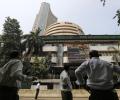
Top gainers in the Sensex pack included Sun Pharma, TechM, Axis Bank, L&T, Reliance Industries and ICICI Bank, which rose up to 2.66 per cent.
